Happily Ever After Belgium
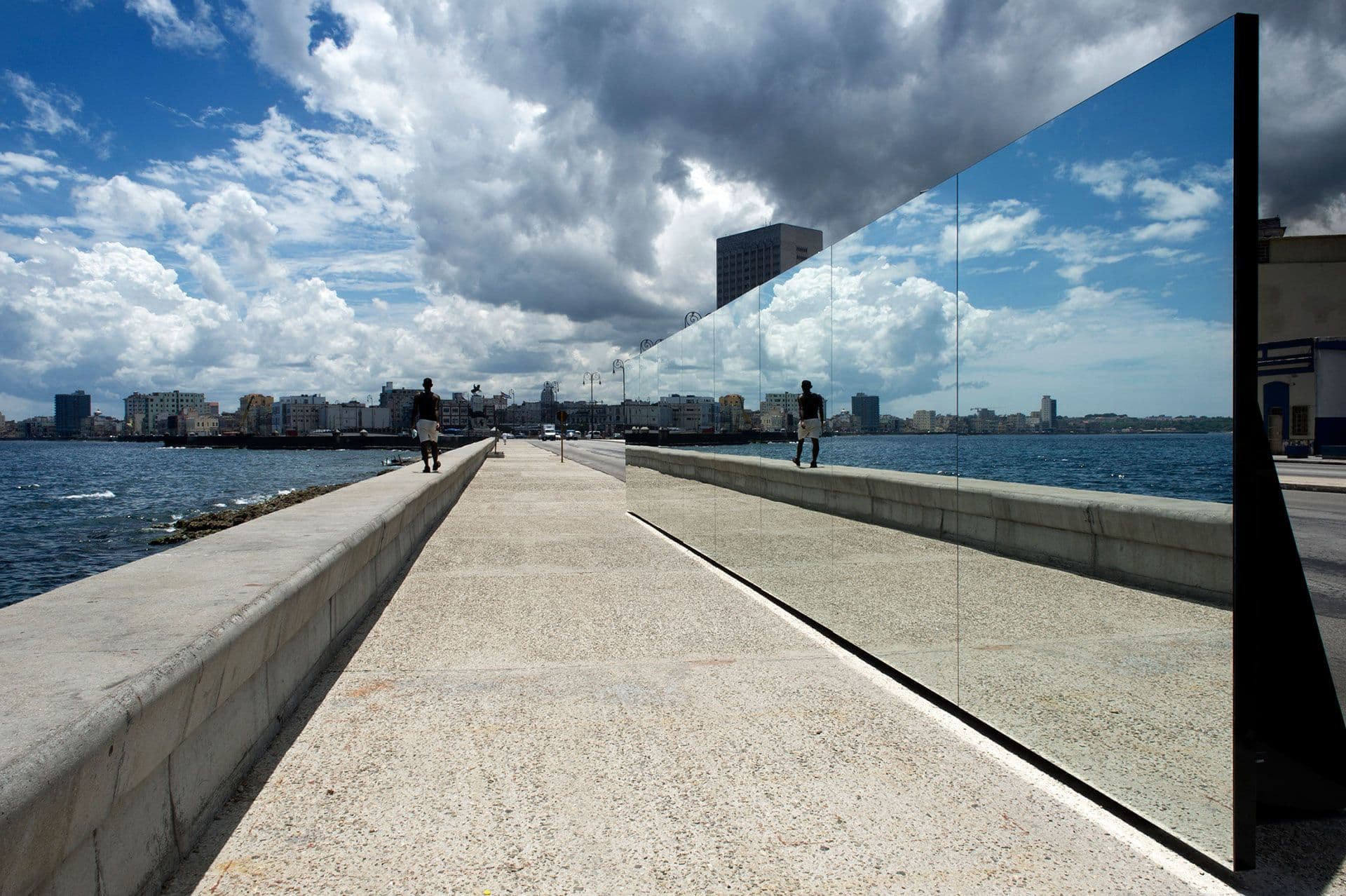
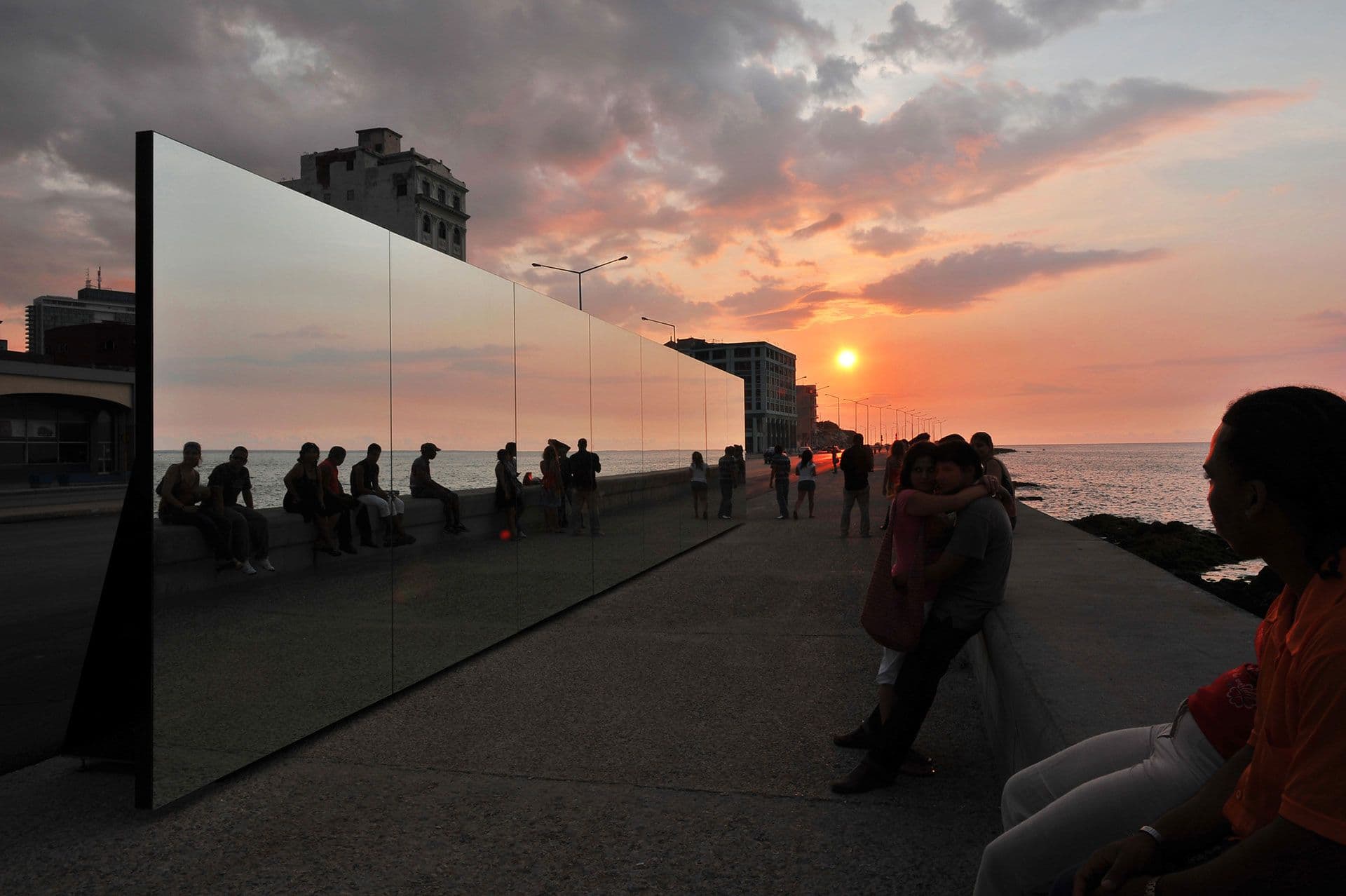
Installed within the framework of the XIX Bienal de La Habana as part of the curatorial project Detrás del Muro, the work Happily Ever After by Rachel Valdés proposes a profound reflection on the relationship between the individual, the urban space, and the perception of reality. This site-specific installation, located on Havana’s emblematic Malecón, symbolically reconfigures a territory loaded with history, memory, and collective identity.
Measuring 16 meters long, 3 meters high, and 1 meter deep , the artwork is composed of laminated safety mirrors , a stainless steel structure , and sheets of Dibond and polycarbonate. Its minimalist yet monumental architecture transforms the landscape into a constantly evolving perceptual phenomenon.
The mirror as a metaphor for time and the city
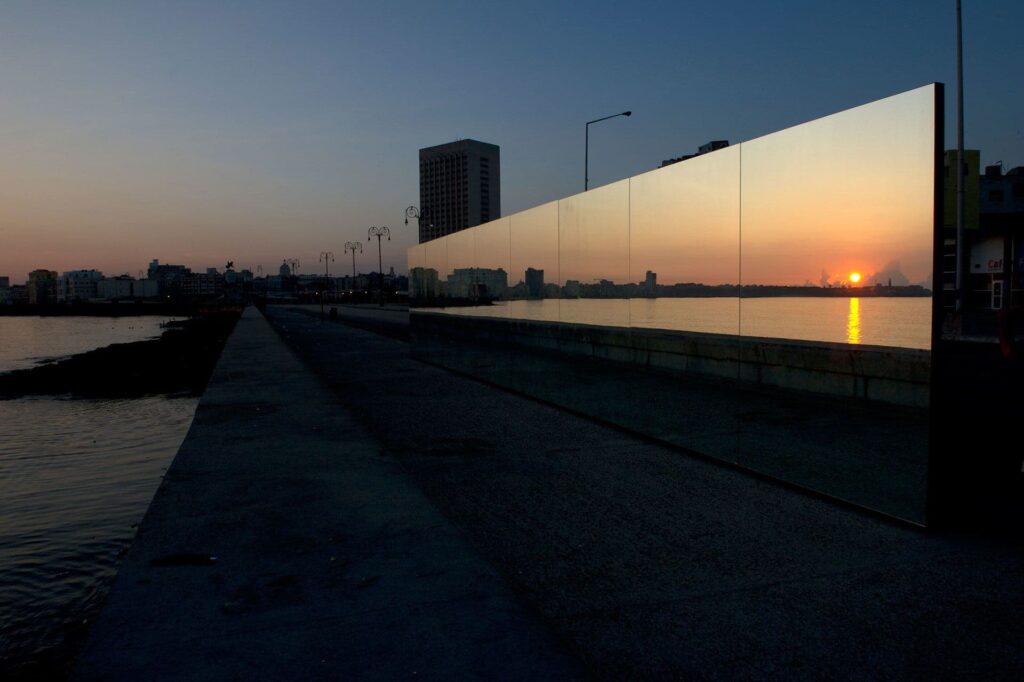
Happily Ever After functions as an optical threshold, an interface between the visible and the intangible. The specular surface not only reflects the city and its skyline, but also fragments, duplicates, and dilutes them, generating an ambiguous and fluid reality. The viewer thus becomes part of an ephemeral scene, in which the boundary between the real and the imagined vanishes.
By altering the linear perception of urban space, the work invites a poetic reading of the environment. Each reflection is also a question: what do we really see when we observe the city? What part of our collective history is projected onto its surface? In this installation, the mirror becomes a device for cultural introspection.
The Malecón as a symbolic setting
Located in one of Havana’s most symbolic places, the artwork could not exist without its context. T El Malecón es un espacio de tránsito, deseo y memoria, testigo de despedidas, regresos, exilios y reencuentros. Happily Ever After no es solo una intervención estética: es una acción poética sobre el espacio público.
The installation duplicates the image of the skyline, visually expanding the city into a speculative future. This reflected skyline is also a reflection of desire, an invitation to imagine new urban narratives, both personal and collective. Thus, the work articulates a silent narrative where the political and the poetic converge .
A critical high-impact urban facility
With this piece, Rachel Valdés reaffirms her position as one of the most insightful voices in contemporary Cuban art. Her use of the mirror as a tool for perceptual and symbolic displacement reveals a conceptual maturity and aesthetic sensibility that transcend the art object, activating urban space as a territory of thought and sensory experience.
Happily Ever After is not limited to reproducing a specular image of the environment: it proposes a rereading of the landscape and our position within it. It is a work that invites us to pause, contemplate, and remember, but also to project. In its mirrored silence, a dialogue opens with history, identity, and the possibility of an ending—or perhaps, a new beginning.
Dimensions:
16mt x 3mt x 1mt
Materials:
Laminated safety mirror, stainless steel frame, dibond sheets, polycarbonate
Presentation:
The XIX Bienal de La Habana, as part of the curatorial project Detrás del Muro.
Location:
Malecón, Havana, Cuba